
CTA Decision Sheds Light on Key Pitfalls in VAT Refund Claims

Recent developments in tax jurisprudence highlight important considerations for taxpayers seeking refunds or tax credits of excess and unutilized input VAT attributable to zero-rated sales. These developments are consistent with established jurisprudence recognizing the evidentiary and procedural requirements governing VAT refund claims, including Atlas Consolidated Mining and Development Corporation v. Commissioner of Internal Revenue (G.R. […]
From Receipts to Returns: The VAT Impact of Reimbursements and Advances
Reimbursements and Advances: What’s the Difference? In a typical business setup, reimbursements and advances occur to ensure smooth operations while balancing convenience and accountability. Reimbursements usually happen after an employee incurs a business-related expense personally, covering costs such as travel, meals, office supplies, or client entertainment which are commonly immaterial in nature. On the other […]
Where Should You Pay? Navigating the Proper Situs of Local Business Taxes
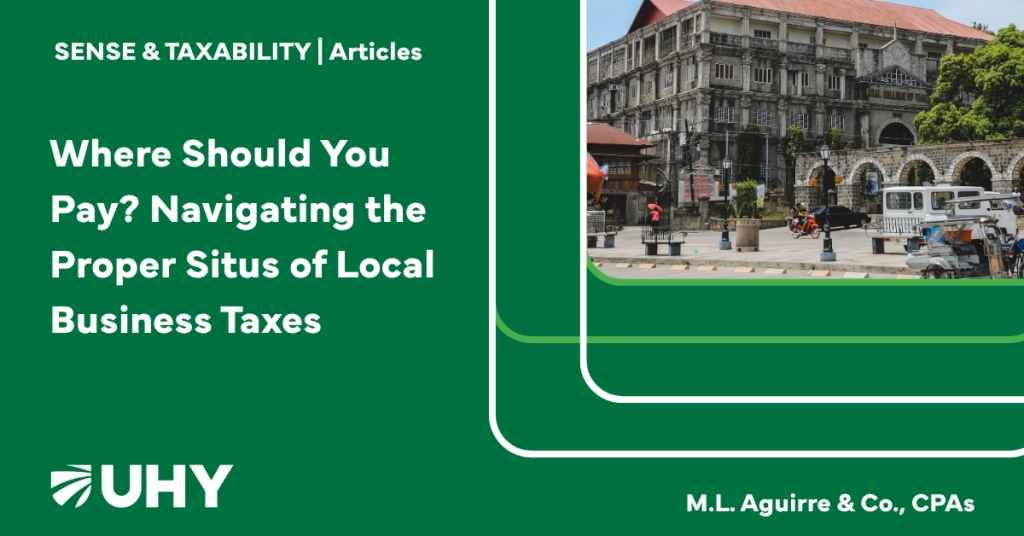
For businesses operating across multiple locations in the Philippines, one of the most frequently misunderstood, and often contested, issue in local taxation is the proper situs of local business taxes (LBT). While national taxes are generally governed by uniform rules, LBT is imposed and administered by local government units (LGUs), each with its own tax […]
Choosing the Right Remedy: Strategic Use of Tax Compromise and Abatement
In the Philippines, tax assessment issues between taxpayers and the government are an inevitable reality. Assessments issued by the Bureau of Internal Revenue (BIR) may arise from differences in interpretation, factual discrepancies, or compliance gaps. When such situations arise, taxpayers are not left without recourse. The National Internal Revenue Code of 1997 (NIRC), as amended, […]
Dividing Property After Death: How Families Can Do It Right
Losing a loved one is never easy, but what comes after can be just as challenging. Dividing property, settling obligations, and deciding “who gets what” can quickly become sources of tension if not handled properly. In many families, disagreements arise not out of ill intent, but from uncertainty and differing expectations. In the case such […]
From Deed to Duty: Understanding Taxes in Philippine Property Transfers
Transferring real property ownership in the Philippines is more than just signing a deed. Every transfer triggers a set of national and local tax obligations, and failure to comply can result in interest, surcharges, penalties, or delays in registration. Whether the transfer arises from a sale, donation, inheritance, or corporate restructuring, understanding the tax implications […]
E-Invoicing in the Philippines: What Every Business Should Know Before the December 2026 Deadline
What Exactly Is E-Invoicing? In simple terms: instead of handing a customer a printed or PDF invoice and calling it done, the BIR wants invoice data submitted directly to its systems — structured, machine-readable, and automatically validated. Two Terms, Not One Electronic Invoicing — issuing the invoice itself in a structured, digitally signed format (JSON) […]
The 2026 UHY Asia Pacific Conference – From an Associate Perspective
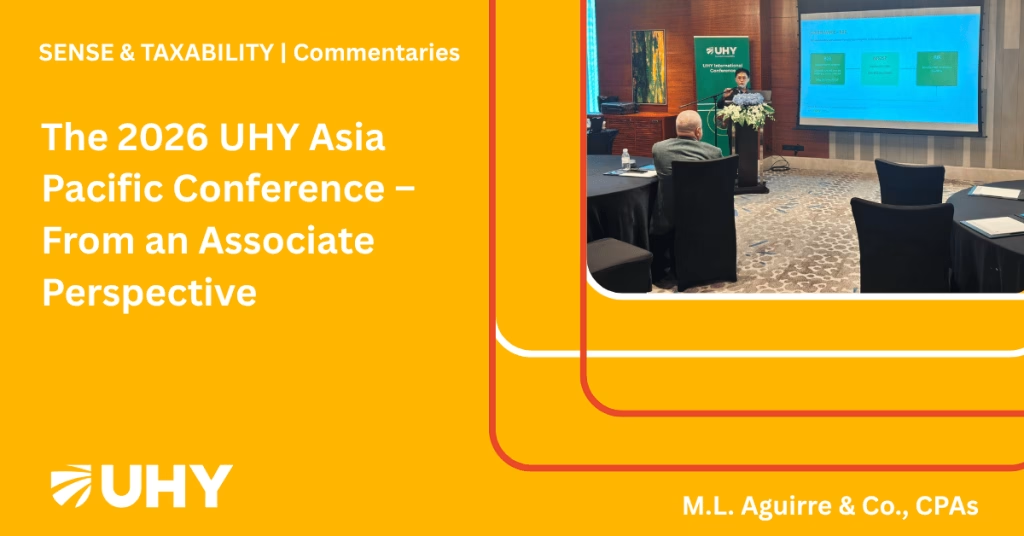
It has been a little over two weeks since the 2026 UHY Asia Pacific Conference in Shanghai, China, held from July 29–31, yet the learning, inspiration, and sense of gratitude from the experience remain very much with me. What made the conference particularly meaningful was the opportunity to meet and learn from partners, CEOs, directors, […]
Simplifying the Accreditation of Donee Institutions
Donations help social welfare groups provide food, shelter, education, health assistance, disaster relief, and other services to people in need. Article II, Section 23 of the 1987 Philippine Constitution supports this by encouraging non-governmental and community-based organizations that promote national welfare. The law encourages giving through tax incentives. Under Section 34(H) of the National Internal […]
When Related Party Transactions Trigger Disallowed Deductions
Transactions between related parties are a common feature of business operations. Companies often engage in dealings with shareholders, subsidiaries, affiliates, or other entities under common ownership for legitimate commercial purposes such as financing arrangements, operational support, or asset transfers within a corporate group. While these transactions may be valid from a business standpoint, they can […]